IN BLOSSOM, IN SHADE

The shape of beauty
Beauty Blooms Where Light Meets Shadow.
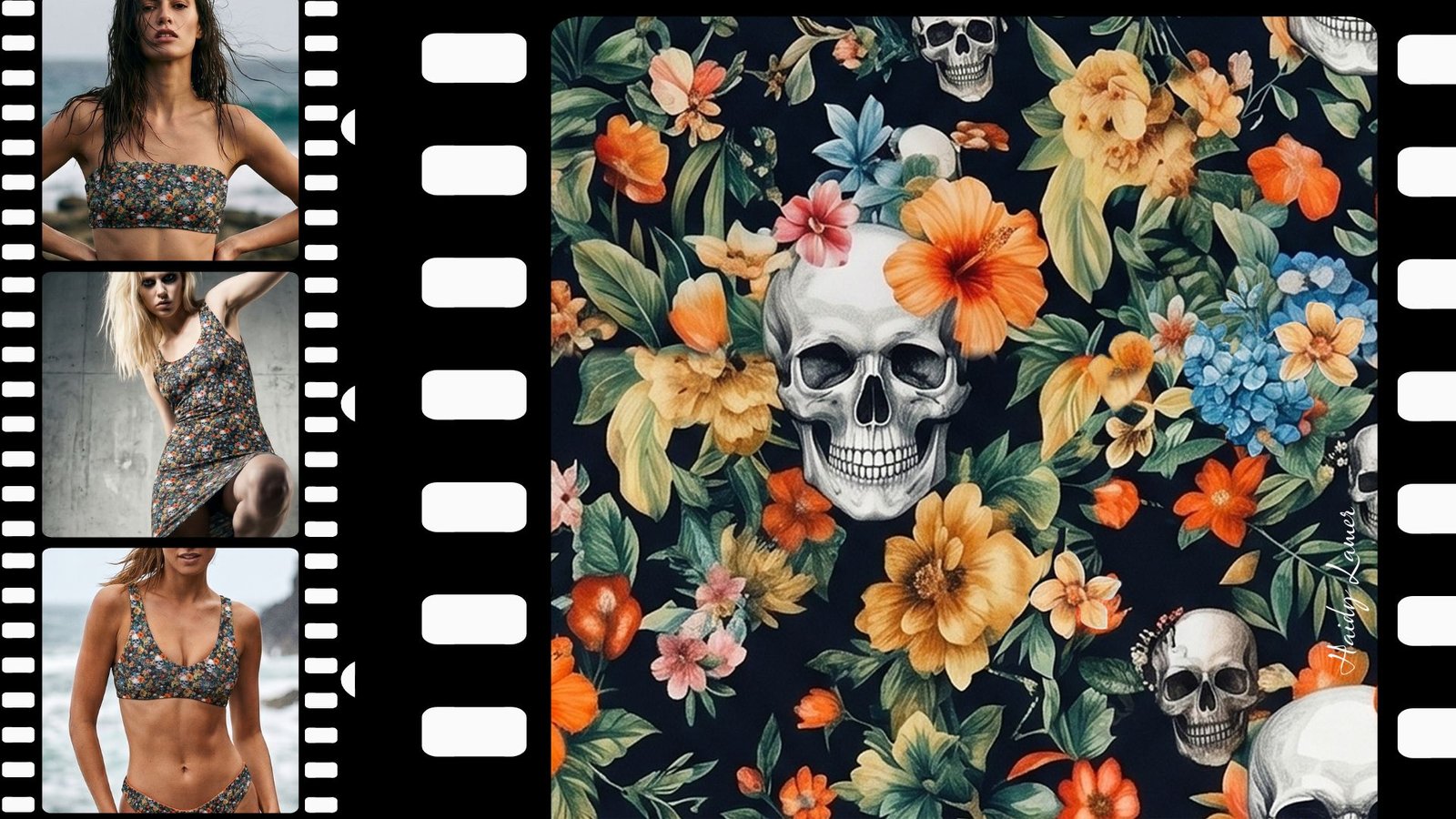
The iconography of the Flowers & Skulls capsule collection for Studio Cheidy’s Petite Robe Noire, tops, and swimwear translates into an all-over print that transcends ornamental function to become a true visual language.
Constructed like a decadent garden in which flowers and skulls share the same breath, the composition draws on a layered imagery that spans literature, art, and cinema. Its roots lie in botanical decadence and British Gothic aesthetics, evoking the suspended atmospheres of The Woman in White, the gardens of memory in Rebecca, the corruptible beauty of The Picture of Dorian Gray, and the ambiguous floral seduction of Dracula.
But Hollywood noir cinema also plays a role in the construction of this iconography. As in the great noirs of the 1940s and 1950s, reality is never fully revealed: every element exists in the tension between visible and invisible, attraction and threat, desire and destiny. Chiaroscuro, the aesthetic hallmark of that cinematic language, is here translated into fabric: the flower becomes light, the skull shadow; together they construct an unstable balance in which beauty is born from the coexistence of opposites.
The print thus takes the form of a psychological landscape, closer to an inner state than a decorative motif. As in noir sets, where architecture reflects the characters’ anxieties, here too the design becomes a mental space, a place of memory, metamorphosis, and desire.
The flower is not decoration. It’s memory.
The skull is not provocation. It’s transformation.
Wearing this print means inhabiting a story. A story in which elegance does not coincide with perfection, but with the depth of the symbol; where femininity renounces innocence to acquire complexity, and fashion becomes a visual narrative, capable of intertwining the sensuality of noir, the melancholy of the Gothic, and the poetic power of contrast.
In this vision, clothing doesn’t simply dress the body: it holds an imaginary world. A dark garden where every flower tells of rebirth and every skull reminds us that transformation is the most authentic form of beauty.
THE DRESS CODE
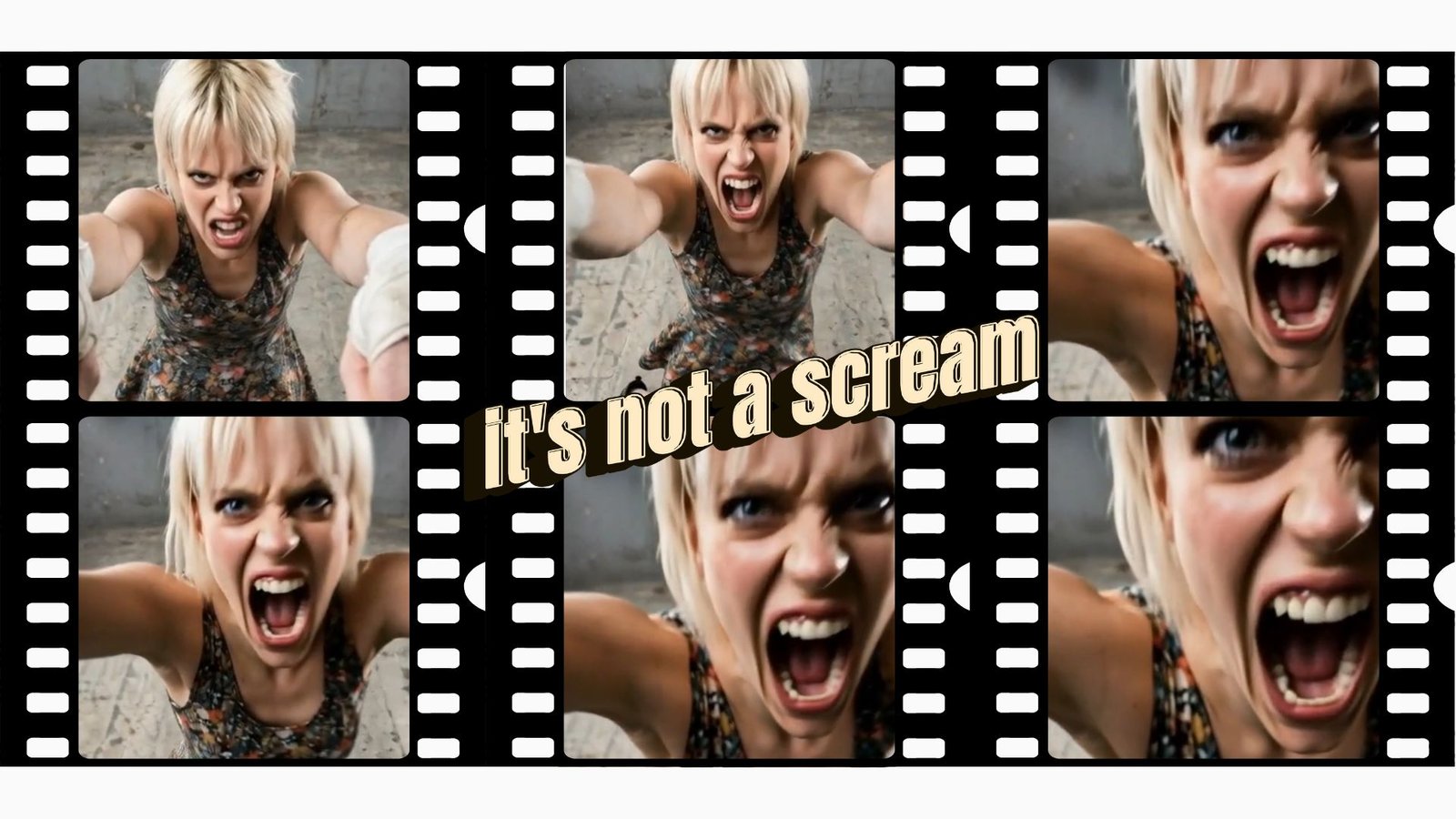
It’s not a scream.
It’s the exact moment when silence ceases to be a language.
There’s an instant when everything that has been held back finally finds form. It’s not anger. It’s not fear. It’s the physical manifestation of a presence that decides to occupy space.
Each frame of this editorial inhabits that moment.
The construction of the images stems from a reflection on time even before fashion. As in Eadweard Muybridge’s chronophotographic experiments, the sequence doesn’t simply record movement: it breaks it down to make its invisible intensity perceptible. It doesn’t recount an action. It recounts the birth of an emotion.
Six frames.
Six variations of the same internal detonation.
The frame progressively narrows, transforming the body into language. From the widest field, in which the figure still maintains a relationship with space, we move to a series of close-ups that compress every distance until it disappears. The viewer no longer observes the scene: he enters it.
The camera—and the lens—adopt a dramatically low, almost impossible perspective. This choice alters the proportions of the body, amplifies the tension of the outstretched arms, and transforms the face into an emotional architecture. There’s no pursuit of a pose. There’s a pursuit of impact.
This visual grammar engages openly with film noir and the language of the psychological thriller. The use of extreme perspective, optical distortion, and aggressive proximity interrupts aesthetic contemplation and replaces it with emotional participation. As in the great Hollywood noirs, the shot doesn’t describe reality: it makes a state of mind visible.
The lens ceases to be a neutral instrument.
It becomes a psychological device.
The viewer is almost assaulted by the protagonist’s presence, to the point of losing all sense of security.
It is here that The Dress redefines its code.
The dress does not tame the body.
It amplifies it.
It does not construct an image.
It liberates a voice.
This is why it’s not a scream.
It’s a statement.
It is the moment when fashion ceases to be superficial and becomes gesture, identity, a statement.
The dress does not dress a character.
It reveals a woman who no longer asks to be looked at.
She demands to be observed.
Leave a Reply
You must be logged in to post a comment.